9 Best Freshdesk Alternatives for Small Teams (2026)
Freshdesk too clunky or pricey as you grow? Compare 9 Freshdesk alternatives on price, channels, and setup - picked for small support teams.

The best Freshdesk alternatives for small teams are Help Scout, SupportBee, and Zoho Desk for email-first support, with Intercom and Gorgias better suited to chat-led and ecommerce teams. Freshdesk is a capable help desk, but small teams often outgrow its ticket-heavy interface, run into features locked behind higher tiers, or just want something faster to set up.
This guide compares 9 Freshdesk alternatives in 2026: Help Scout, SupportBee, Zoho Desk, Zendesk, Intercom, Front, Gorgias, HubSpot Service Hub, and Hiver. Each section covers what the tool does best, what it costs, and where it falls short for a small team. By the end you will know which one fits your channels, your budget, and the way your team actually works.
Weighing other platforms too? See our guides to the best Zendesk alternatives and the best Help Scout alternatives, or our full roundup of the best customer service software.
Quick comparison: 9 best Freshdesk alternatives
| Platform | Best for | Free tier | Starting price |
|---|---|---|---|
| Help Scout | Clean email-first support | Free for 50 contacts | $25/user/mo |
| SupportBee | Small collaborative teams | 14-day trial | $17/user/mo |
| Zoho Desk | Affordable, bundled with Zoho | Yes (3 users) | $14/user/mo |
| Zendesk | Scaling into mid-market | No | $19/agent/mo |
| Intercom | Chat-led and AI support | No | $39/seat/mo |
| Front | Collaborative shared inbox | No | $19/seat/mo |
| Gorgias | Shopify and ecommerce | No | $10/mo (50 tickets) |
| HubSpot Service Hub | Teams already on HubSpot | Yes (Free) | $20/seat/mo |
| Hiver | Gmail-native teams | 7-day trial | $19/user/mo |
Why teams leave Freshdesk
Freshdesk does a lot, and that is part of the problem for small teams. A few patterns come up again and again:
- The interface is ticket-heavy. Every conversation becomes a ticket with a status, a priority, and a queue. For a five-person team answering email, that structure can feel like overkill.
- Useful features sit behind higher tiers. Round-robin assignment, custom roles, and some automation only unlock on pricier plans, so the real cost climbs as you grow.
- Setup takes time. Getting portals, automations, and SLAs configured is not a same-day job.
- The customer-facing portal can feel impersonal. Customers see ticket numbers and a branded help desk rather than a normal email reply.
None of this makes Freshdesk a bad product. It just means a smaller, simpler, or more channel-specific tool is often a better fit. The nine alternatives below cover those cases.
How to choose the right Freshdesk alternative
The right replacement depends on five practical questions:
- What channels do your customers use? Email-first teams want a clean shared inbox. Chat-led teams want a messenger. Match the tool to your top two channels.
- How big is your team? Under 20 agents usually means you want fast setup and a simple interface, not enterprise role management.
- What do you already run? A Gmail team saves weeks with Hiver. A HubSpot team gets the most from Service Hub. A Shopify store is best served by Gorgias.
- What is your budget per agent? Entry prices here range from $10 a month to $39 per seat. Watch for features that only unlock on higher tiers.
- How much AI do you actually need? AI replies and summaries sell well in demos but add cost. Most small teams get more value from a clean inbox than from a chatbot they never tune.
The 9 best Freshdesk alternatives
1. Help Scout: best for clean email support

Help Scout treats each conversation like an email thread, not a ticket in a queue. Customers get a normal reply with no ticket numbers, while your team works from a shared inbox with saved replies, light automation, and a built-in knowledge base.
Best for: Email-first teams that want a polished, customer-friendly experience.
Pricing: Starts at $25 per user per month. A free tier covers up to 50 contacts.
Where it falls short: Live chat and phone are lighter than on Zendesk or Intercom, and per-user pricing adds up faster than some rivals as you scale.
2. SupportBee: best for small collaborative teams
SupportBee is built for email-first small teams that want to answer support together without ticketing overhead. It pairs a shared inbox with a knowledge base and a customer portal, so customers get plain email replies while your team collaborates with comments and assignments behind the scenes.
Best for: Small teams (under 20 agents) that want a simple shared inbox plus a customer portal at a predictable price.
Pricing: $17 per user per month on the Startup plan, or $21 per user per month on Enterprise (which adds the customer portal). There is a 14-day free trial and no credit card is required.
Where it falls short: SupportBee is not a chat-first product. Live chat and phone are integrations rather than native channels.
3. Zoho Desk: best value and Zoho ecosystem fit

Zoho Desk is an affordable, omnichannel help desk that handles email, phone, chat, and social from one place. It is an easy pick if you already use other Zoho products, since everything connects out of the box.
Best for: Budget-conscious teams, and anyone already in the Zoho ecosystem.
Pricing: Paid plans start at $14 per user per month, billed annually. A free plan covers up to 3 agents.
Where it falls short: The interface is dense, and getting the most out of it means learning Zoho's way of doing things.
4. Zendesk: best for scaling into mid-market

Zendesk is the most direct like-for-like replacement if you are leaving Freshdesk because you need more depth, not less. It covers ticketing, messaging, voice, a knowledge base, and mature reporting, with a large app marketplace.
Best for: Teams that expect to scale and need role-based permissions, custom workflows, and reporting depth.
Pricing: Starts at $19 per agent per month, with the messaging and AI tiers costing more.
Where it falls short: It is more platform than most small teams need, and the price climbs quickly once you add channels. If that is your worry, our Zendesk alternatives guide goes deeper.
5. Intercom: best for chat-led and AI support
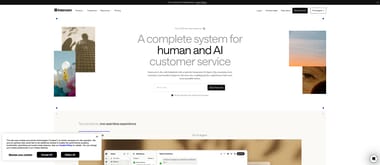
Intercom leads with a polished messenger and proactive messaging. Its AI agent can resolve common questions before they reach a human, which suits product teams that support users inside an app.
Best for: Chat-first and product-led teams that want strong in-app messaging and AI.
Pricing: Starts at $39 per seat per month, and AI resolutions are often billed on top.
Where it falls short: It is one of the pricier options here, and email-first teams pay for messaging features they may not use.
6. Front: best collaborative shared inbox
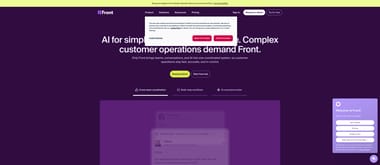
Front blends a shared inbox with email-client familiarity. Teams can comment on messages, draft replies together, and manage shared addresses like support@ without stepping on each other.
Best for: Teams that live in email and want to collaborate on replies.
Pricing: Starts at $19 per seat per month.
Where it falls short: Knowledge base and self-service features are thinner than on dedicated help desks, so you may need to add a tool.
7. Gorgias: best for Shopify and ecommerce

Gorgias is built for online stores. It pulls order data into the support view, so agents can see a customer's purchases, issue refunds, and edit orders without leaving the conversation.
Best for: Shopify and BigCommerce stores that want support tied to order data.
Pricing: Starts at $10 per month for a low ticket volume, then scales with usage.
Where it falls short: Outside of ecommerce, much of its value disappears. It is a poor fit for general B2B support.
8. HubSpot Service Hub: best free starting point
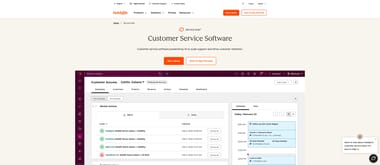
If you already run HubSpot for sales or marketing, Service Hub adds a help desk on top of the same contact records. Tickets, a knowledge base, and customer feedback surveys all share one CRM.
Best for: Teams already invested in HubSpot.
Pricing: A free tier covers the basics, with paid plans starting at $20 per seat per month.
Where it falls short: The most useful automation and reporting sit on higher tiers, and the platform is heavy if you only want support.
9. Hiver: best for Gmail-native teams
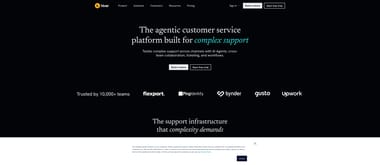
Hiver turns Gmail into a shared help desk. Your team assigns, tracks, and collaborates on support email without leaving the inbox they already use, which means almost no learning curve.
Best for: Teams that already run on Google Workspace and do not want to leave Gmail.
Pricing: Starts at $19 per user per month, with a 7-day trial.
Where it falls short: Because it lives inside Gmail, it is less suited to teams that need a true multi-channel help desk with phone and chat built in.
How to choose: a quick recap
For email-first small teams, Help Scout and SupportBee are the strongest starting points, with Zoho Desk the value pick. Zendesk wins if you are scaling up rather than simplifying. Intercom suits chat-led product teams, Gorgias suits Shopify stores, and Hiver is the obvious choice if your team lives in Gmail. Match the tool to your channels and team size first, and treat price as the tie-breaker.
If you are still mapping the wider market, our roundup of the best help desk software for small businesses compares these categories side by side.
Frequently asked questions
What is the best Freshdesk alternative?
There is no single best option - it depends on your channels and team size. For email-first small teams, Help Scout and SupportBee are the strongest picks. Zoho Desk is the best value, Intercom wins for chat-led teams, and Gorgias is best for Shopify stores.
Is there a free Freshdesk alternative?
Yes. Zoho Desk has a free plan for up to 3 agents, HubSpot Service Hub has a free tier, and Help Scout is free for up to 50 contacts. SupportBee offers a 14-day free trial rather than a permanent free plan.
Freshdesk vs Zendesk: which is better for small teams?
Both are full help desks, and both can feel heavy for a small team. Freshdesk has a more generous free plan, while Zendesk offers more depth as you scale. If you want something simpler than either, an email-first tool like Help Scout or SupportBee is usually the better fit.
Why do teams switch from Freshdesk?
The common reasons are a ticket-heavy interface, useful features locked behind higher tiers, and setup that takes longer than expected. Smaller teams often want a simpler shared inbox that gives customers a normal email reply instead of a ticket number.
Is SupportBee a good Freshdesk alternative?
For small, email-first teams, yes. SupportBee gives you a shared inbox, a knowledge base, and a customer portal at a predictable per-user price, without the ticketing overhead. It is less suited to teams that need native live chat or phone support. You can start a free trial to compare it directly.